
Mills County Sex Offender Checks
The free Texas Public Sex Offender Registry is the primary statewide channel for Mills County. The DPS Crime Records Service provides the agency context. Texas DPS accepts searches by name, area or address, and an institution of higher education. A county filter helps narrow an area search, while an exact name search is useful when enough identity facts are known.
When a registry entry raises a local data question, contact the registering authority shown in the profile. Mills County residents may also call the Sheriff’s Office at 325-648-2245 about local registration or verification procedure. DPS publishes a separate public-information request route, while Chapter 62 still protects excluded fields. These channels supplement one another; none should be treated as a prediction of future conduct.
Mills County Registry Search Modes
Name, area, and college searches should not be treated as interchangeable. Name searching depends on spelling and identity fields. The redesigned Texas form requires both first and last name for an exact-name query and permits an optional birth date. An exact-address search instead calls for street number, street name, city, Texas, and ZIP. The institution route requires an institute selection followed by its related campus. A county or radius route can be more useful when the concern is a place rather than a person.
The official Texas registry search screen shows the public starting point for these Mills County sex offender records.
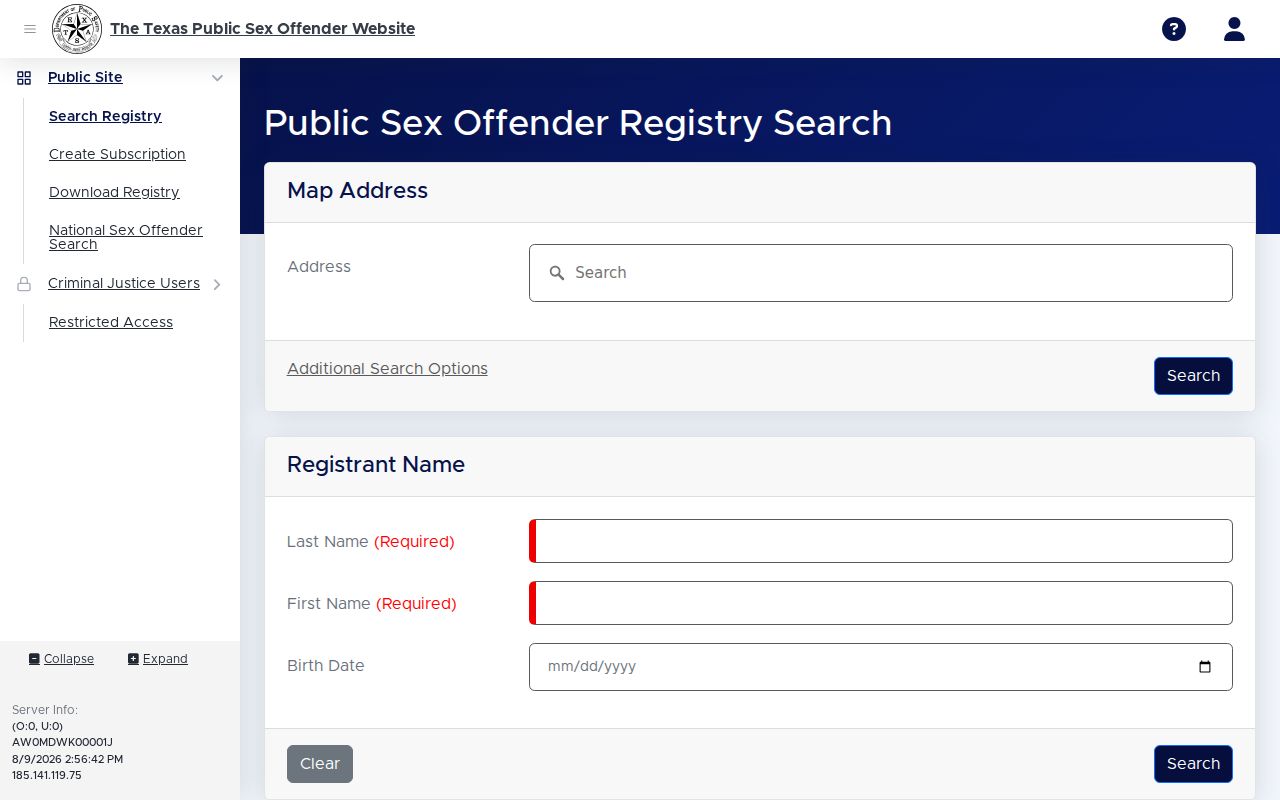
The screen reinforces why the search type must be chosen before interpreting a result list. A missing map point is not the same as a missing registration record.
Texas Public Sex Offender Registry Searches
DPS manages the statewide registry and publishes data sent by local registering authorities. Start with the smallest set of facts that can reliably identify either the person or the area. Do not stop at a name match. Open the public profile and compare the photograph, birth date or age, physical details, address, reporting agency, status, and offense information before drawing a conclusion.
- Open the Texas registry and review its conditions of use.
- Choose name, address or area, county, or higher-education search based on the question.
- Enter exact facts when known, then review nearby or similar results with care.
- Open the profile and confirm several identity and registration fields with the registering authority.
| Field or control | Type | Required | Use |
|---|---|---|---|
| Search type | Tabs or options | One path | Name, area/address, or higher education |
| Last and first name | Text | Both for exact name | Birth date may narrow a namesake result |
| SID | Text | No | Uses a known Texas state identifier |
| Street, city, ZIP | Text | For exact address | Street number and name are separate inputs |
| County and radius | Select | Optional | Choose Mills and the live radius when offered |
| Institute and campus | Dependent selects | For college search | Campus follows the institute choice |
Note: Registry controls may change, so read the live labels before relying on an older saved search.
Registry Profiles: What They Show
A public Texas profile supplies enough data to test identity and understand the legal basis of registration without exposing every fact held by DPS. The listed address or geographic description may include an unmapped status because geocoding cannot place every reported location. Vehicle and higher-education facts can appear where Texas law makes them public. A profile can also identify the reporting agency and current status, which tells a reader where to direct a correction question.
| Name and aliases | Published identity names used to distinguish possible matches. |
|---|---|
| Photo and description | Photograph, age or birth date, sex, race, height, weight, hair, eyes, and listed marks. |
| Residence | Public address or geographic description, including an unmapped concept when needed. |
| Offense record | Offense, conviction date, victim age, punishment, and qualifying supervision facts. |
| Registration facts | Reporting authority, legal status, and public vehicle or higher-education information when applicable. |
| Protected fields | No Social Security number, driver-license number, telephone, online identifiers, victim identity, or protected juvenile data. |
The DPS registry FAQ explains this public and nonpublic boundary.
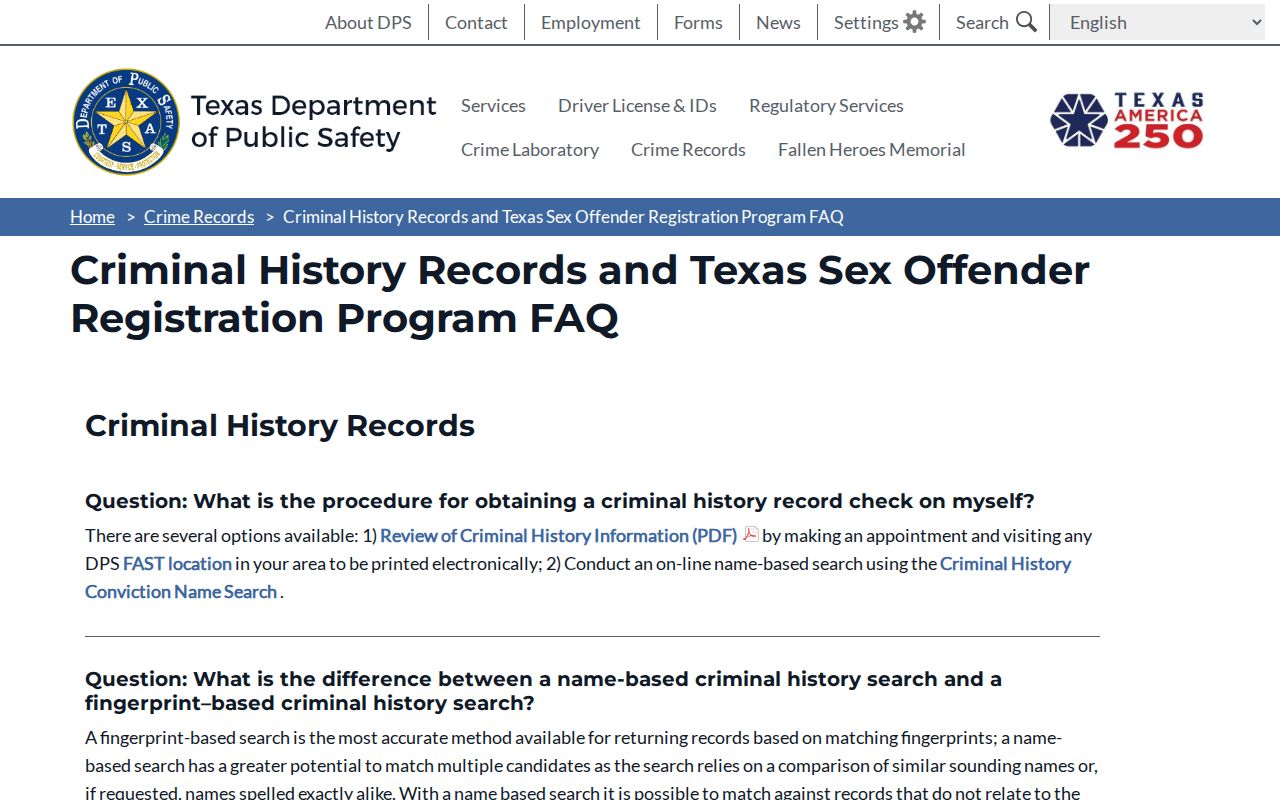
The distinction protects sensitive identifiers and victims while leaving core registration facts available for careful public review. DPS separately explains limits on bulk and research requests through its criminal-history data request guidance.
Mills County Registry Map Corrections
A map pin can be misplaced, stale, or absent even when a registration entry exists. First compare the profile’s written address, status, and reporting agency with the mapped point. Save the record identifier and describe the suspected issue without reposting private details. Next, contact the registering agency displayed on the profile. If the entry identifies a Mills County authority, the Sheriff’s Office can explain its verification process. DPS is the proper statewide contact when publication itself appears wrong.
Shared names require the same restraint. Compare multiple public fields, not just the first and last name. Photograph, birth date or age, physical description, address, offense details, and reporting authority can rule out a namesake. The DPS Crime Records FAQs explain the broader name-versus-fingerprint distinction. A mismatch calls for source correction rather than speculation.
Registration Levels and Duties in Texas
Texas risk assessments may use Level 1 for low, Level 2 for moderate, Level 3 for high, and a civil-commitment designation. These are not federal SORNA tiers. More important, the risk label does not itself set the registration duration. Chapter 62 bases duration on the reportable adjudication, offense, history, and statutory category. Verification frequency is another separate question. Some people verify annually, specified multiple sexually violent offenses can trigger 90-day verification, and civil commitment can require verification every 30 days.
| Chapter 62 category | General duration | Verification concept |
|---|---|---|
| Offense listed in Article 62.101 for lifetime | Lifetime | At least annual, with more frequent rules for some categories |
| Other reportable conviction or adjudication | Generally through ten years after discharge from specified sanctions | Annual unless another statutory frequency applies |
| Specified multiple sexually violent offenses | Lifetime in listed circumstances | Often every 90 days under Article 62.058 |
| Civil commitment | Controlled by the qualifying duty and orders | Every 30 days in the documented category |
| Certain juvenile matters | Special duration, exemption, or deregistration rules | Chapter 62 and the court order control |
Updates can cover address, status, vehicle, education, and other required changes. Always consult the current Code of Criminal Procedure Chapter 62 for the specific offense and history.
Mills County Registry Across Borders
The National Sex Offender Public Website is the official U.S. Department of Justice supplement when a safety question extends beyond Texas. It searches participating public registries rather than replacing the Texas source. Conditions and CAPTCHA controls may apply. For a Mills County address, begin with Texas because its profile schema and registering authority are the direct state records. Use NSOPW when travel, family safety, or a nearby out-of-state address makes a wider geographic check useful.
The national search interface shows how the cross-state layer is presented.
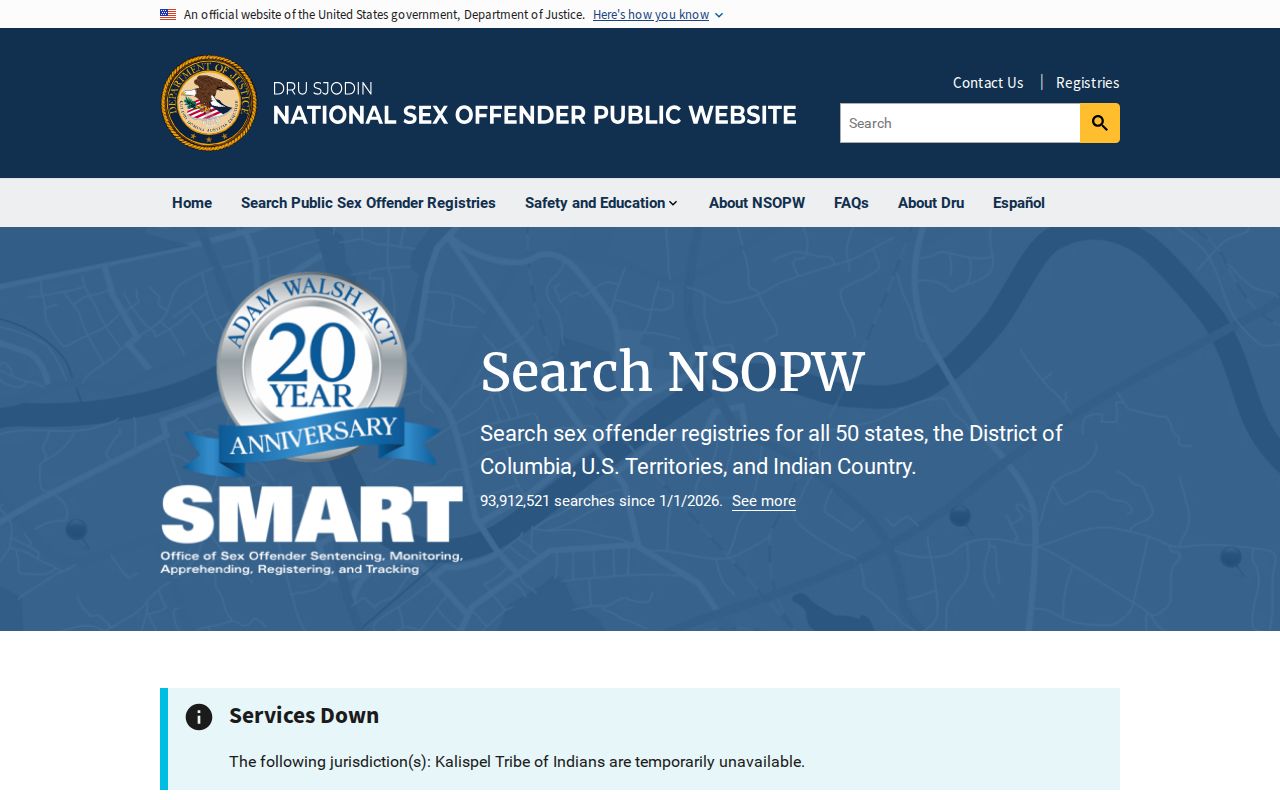
A national result should still be opened and verified with the contributing state registry and the authority named in that record.
Mills County Registry Duty Timing
Duration answers how long the legal duty lasts. Verification frequency answers how often the registrant must report. Risk assessment describes a different concept. Combining these three ideas into one tier chart creates a false rule that Texas law does not support. A Level 3 label, for example, is not enough by itself to determine a lifetime duty. The underlying offense, number and type of reportable matters, release or discharge date, juvenile rules, civil commitment, and any court order must be reviewed.
For a profile-specific timing question, note the offense and status shown publicly, then ask the responsible authority which Chapter 62 provision controls. The public registry may show verification and status facts, but it is not a substitute for the statutory analysis. This distinction matters when a reader sees an annual check-in on one record and a much shorter interval on another.
Using Registry Information Lawfully
Registry access supports personal, family, neighborhood, and community awareness. It does not establish that a person will offend again. Check identity, read the offense and status carefully, and verify an uncertain fact with the authority that maintains it. Do not confront anyone or treat a map point as permission to trespass. The proper response to a data error is a documented correction request. The proper response to an urgent safety concern is contact with law enforcement.
Misuse warning: Misusing registry information to threaten, harass, trespass, intimidate, discriminate unlawfully, or commit another crime is prohibited. Texas Code of Criminal Procedure Chapter 62 and the registry warning govern lawful access and use.
A focused TPIA request may seek a public local field, but it cannot turn confidential victim data or protected identifiers into public information. Keep the request narrow, cite the public purpose, and verify the response with the maintaining office.